
2026-07-06 16:29:45China Trade News
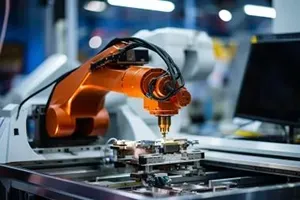
The report points out that the home appliance service industry has entered a new cycle of "weak recovery + structural growth", and the three emerging markets of whole-house intelligent systems, AI displays and service robots will become the core engines driving the industry to leap from traditional "product after-sales" to modern "scenario services" and "value co-creation".
Structural Opportunities in a Weak Recovery: Driven by Both Policy and Technology
Dr. Wang Qian, a researcher at the China National Garment Association, analyzed the report and concluded that the home appliance market in 2026 will exhibit distinct characteristics of "policy support, structural upgrading, accelerated overseas expansion, and channel transformation." Although the overall market faces growth pressure and shows a "weak recovery," opportunities for "structural growth" centered on technological innovation and consumption upgrading are becoming increasingly prominent. She predicts that in the near future, the performance of home appliance exports will likely continue to outperform domestic sales, while product structure upgrading and the development of new market segments will be the core driving forces in the domestic market.
Key policy signals have injected a strong boost into the market. Wang Qian specifically pointed out that the national standard "General Rules for Safe Service Life and Recycling of Household and Similar Electrical Appliances," which officially came into effect on January 1st of this year, mandates that household appliances be labeled with their safe service life and provide risk warnings. This move is expected to significantly accelerate the withdrawal of older appliances that have exceeded their safe service life or have low energy efficiency from the market, creating a huge replacement space for green and intelligent new products. Recently, the Ministry of Commerce proposed a trade-in policy to promote the consumption of green and intelligent household appliances by improving quality and efficiency. This policy is directly linked to service expansion and upgrading, forming a complete policy loop from product updates to service upgrades, providing a solid "policy support" for the new cycle of the industry.
The rise of three emerging markets: reshaping the boundaries of industry and services
The report clearly identifies whole-house smart systems, AI displays, and service robots as the core incremental markets for future growth, and predicts that they will lead the home appliance market to shift from a focus on "products" to a focus on "scenario-based services".
Whole-house smart systems are considered the core carrier of home intelligence. The report predicts that by 2026, its market size will reach 280 billion yuan, with a penetration rate exceeding 35%, and its development path will shift from "single-product intelligence" to "spatial cognition" and "proactive services".
Driven by the combined forces of consumption upgrades and technological empowerment, AI displays are evolving towards high-end and scenario-based applications (such as education, fitness, and art exhibitions).
The application scenarios for service robots are rapidly expanding from basic functions such as cleaning to niche areas such as health management and emotional companionship, indicating a broad market potential.
Services are being redefined: from a "cost center" to a "value co-creation" platform.
The deeper significance of this press conference lies in the industry's revolutionary understanding of the essence of "service." Liu Xiumin, Senior President of the China Service Industry Association, emphasized that the home appliance service industry is no longer an appendage "cost center" of the industry, but rather an emerging field in the booming smart industry that is achieving a "qualitative transformation in service." The user's role is shifting from a passive recipient of service to a participant in service design and value creation.
To this end, the China Service Industry Association (CSAIA) is promoting industry practices by organizing and implementing the "135 Action Plan for Home Appliance Enterprises to Implement High-Quality After-Sales Service" and publicizing the "Implementation Plan for Improving After-Sales Service of Home Appliances" jointly issued by the Ministry of Commerce and other three departments. The aim is to reconstruct the role of service in the entire life cycle of home appliances, achieve cost optimization and value maximization, and explore a value co-creation model of "proactive foresight and dynamic adaptation".
Declare:The sources of contents are from Internet,Please『 Contact Us 』 immediately if any infringement caused